

Motor Insurance · Commercial Vehicles · Business Protection
Commercial Vehicle Insurance
Motor insurance designed to protect commercial vehicles used for transporting goods, passengers or providing business services.
Third-Party Protection
Protection against eligible legal liabilities.
Own Vehicle Cover
Protection against covered vehicle losses.
Financial Protection
Helps reduce major repair and loss costs.
Cashless Repairs
Available through eligible network workshops.
Driver & Passenger
Additional coverage may be available.
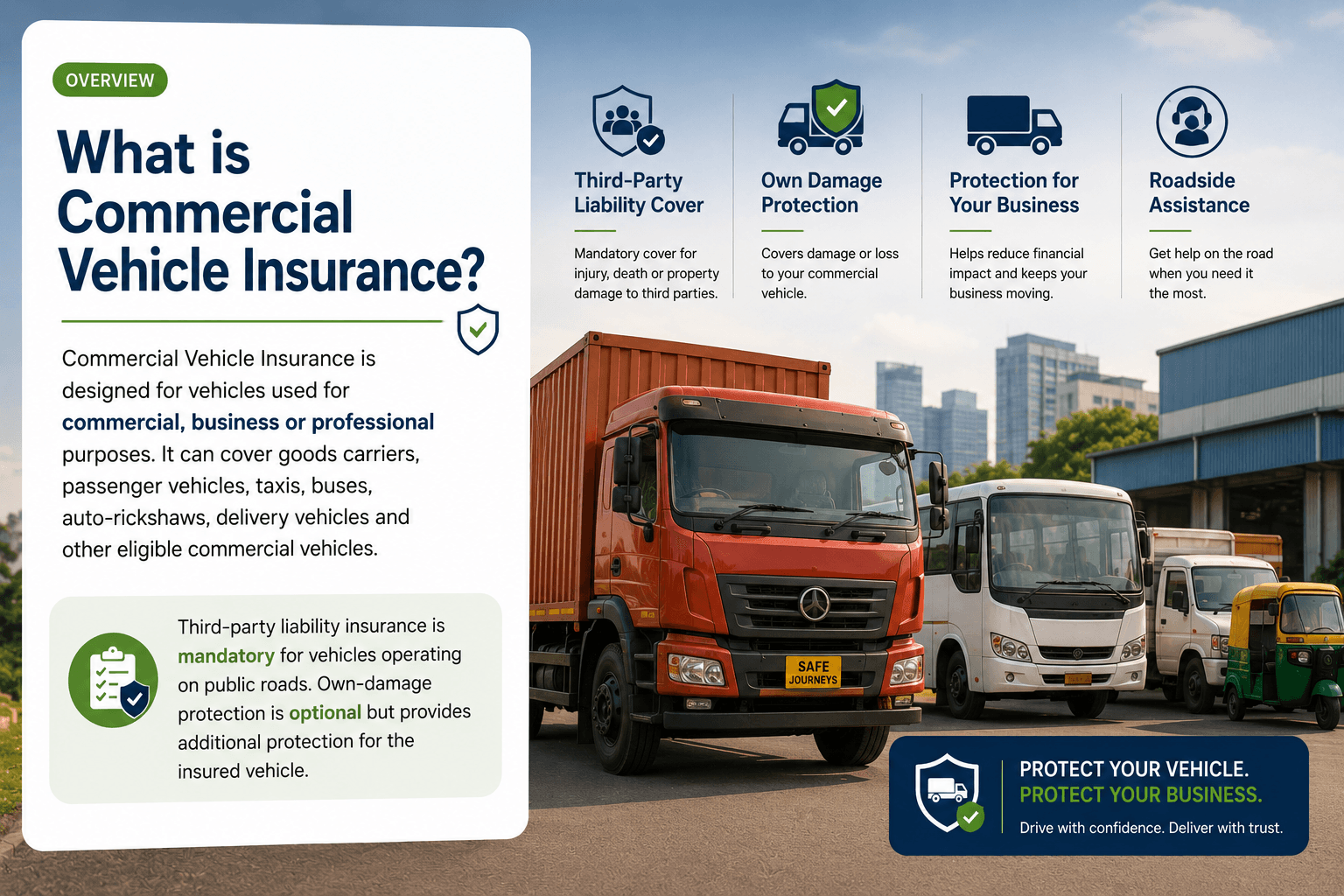
Overview
What is Commercial Vehicle Insurance?
Commercial Vehicle Insurance is designed for vehicles used for commercial, business or professional purposes. It can cover goods carriers, passenger vehicles, taxis, buses, auto-rickshaws, delivery vehicles and other eligible commercial vehicles.
Third-party liability insurance is mandatory for vehicles operating on public roads. Own-damage protection is optional but provides additional protection for the insured vehicle.
Why Consider
Why is Commercial Vehicle Insurance Important?
- Helps meet the mandatory third-party insurance requirement
- Protects against eligible third-party legal liabilities
- Can cover covered damage or loss to the commercial vehicle
- Can reduce the financial impact of major repair costs or theft
- Can help businesses restore vehicle operations after an incident
Vehicle Categories
Vehicles That May Require Commercial Insurance
Goods-carrying vehicles
Passenger-carrying vehicles
Taxis
Buses
Auto-rickshaws
Delivery vehicles
Agricultural vehicles
Construction or special-purpose vehicles
Exact eligibility and product availability depend on the insurer and vehicle category.
Types of Commercial Vehicle Insurance
Third-Party Liability
Covers eligible legal liability for third-party injury, death or property damage. It does not cover damage to the insured vehicle.
Standalone Own Damage
Provides protection against covered loss or damage to the commercial vehicle. A separate third-party policy is required.
Package / Comprehensive
Generally combines third-party liability and own-damage protection under one policy.
Key Benefits
Benefits of Commercial Vehicle Insurance
- Third-party liability protection
- Own-damage protection for covered losses
- Theft and total-loss protection, subject to policy conditions
- Protection against specified natural disasters
- Cashless repairs through eligible network workshops
- Optional add-ons for broader protection
Additional Protection
Drivers, Employees & Passengers
Coverage requirements can differ depending on whether the vehicle carries goods, passengers or employees.
Required coverage depends on the vehicle category, number of people carried and applicable policy terms.
Important
Does Commercial Vehicle Insurance Cover Cargo?
Commercial motor insurance generally protects the vehicle and applicable third-party liability. It does not automatically mean that the goods being transported are fully insured.
Businesses transporting valuable goods should consider whether separate marine cargo, transit or other appropriate insurance is required.
Optional Protection
Common Add-On Covers
Zero Depreciation
Engine Protection
Consumables Cover
Roadside Assistance
Specialised Vehicle Covers
Add-on availability varies by insurer, vehicle category and policy.
Premium
Factors Affecting Commercial Vehicle Insurance Premium
Premiums depend on the vehicle, its usage, location, IDV, claims history, add-ons and deductibles. Compare coverage rather than choosing only by price.
Buying Guide
How to Buy Commercial Vehicle Insurance?
- Purchase directly through an authorised general insurance company
- Use an authorised insurance agent
- Use a registered insurance broker
- Purchase through an authorised digital platform
- Verify the insurer or intermediary before purchasing
- Review the policy wording and coverage carefully
Documentation
Documents Commonly Required
- Vehicle Registration Certificate (RC)
- Previous insurance policy details, where applicable
- Business or vehicle owner identification documents
- PAN or other tax and identification details
- Vehicle make, model and registration details
- Chassis and engine number
- Driver or driving licence details, where required
Exact documentation depends on the insurer and type of commercial vehicle.
Important Factor
Check the Insured Declared Value (IDV)
For own-damage coverage, the IDV represents the insured value of the commercial vehicle. It is particularly important in theft and total-loss claims.
An unnecessarily low IDV may affect the amount payable in a total-loss or theft claim, subject to the policy terms.
Things to Know
Before Buying Commercial Vehicle Insurance
- Choose the correct vehicle category
- Select appropriate third-party and own-damage protection
- Verify the Insured Declared Value (IDV)
- Check driver and employee coverage
- Check passenger coverage where applicable
- Consider separate cargo insurance
- Review add-ons carefully
- Understand deductibles and exclusions
- Check the claims process and network workshops
- Renew the policy before expiry
Claims
Understand the Claims Process
- Know how to report an accident or loss
- Keep the documents required for a claim ready
- Check whether cashless repairs are available
- Review the insurer's authorised garage or workshop network
- Understand the process for theft or total-loss claims
Renewal
Renew the Policy on Time
Maintain uninterrupted insurance coverage by renewing the policy before its expiry date. A break in coverage may result in inspection requirements or other conditions before renewal.
Conclusion
Protect Your Commercial Vehicle & Business
Commercial Vehicle Insurance is an important risk-management tool for businesses that depend on vehicles to transport goods, passengers or provide commercial services.
Compare the vehicle category, permitted usage, third-party requirements, own-damage protection, driver and passenger coverage, IDV, deductibles, exclusions and cargo insurance needs before choosing a policy.
Need help choosing commercial vehicle insurance?
Talk to a Wealth Doctor — free advice.