

PMMY · Business Finance · Micro & Small Enterprises
MUDRA Loan (PMMY)
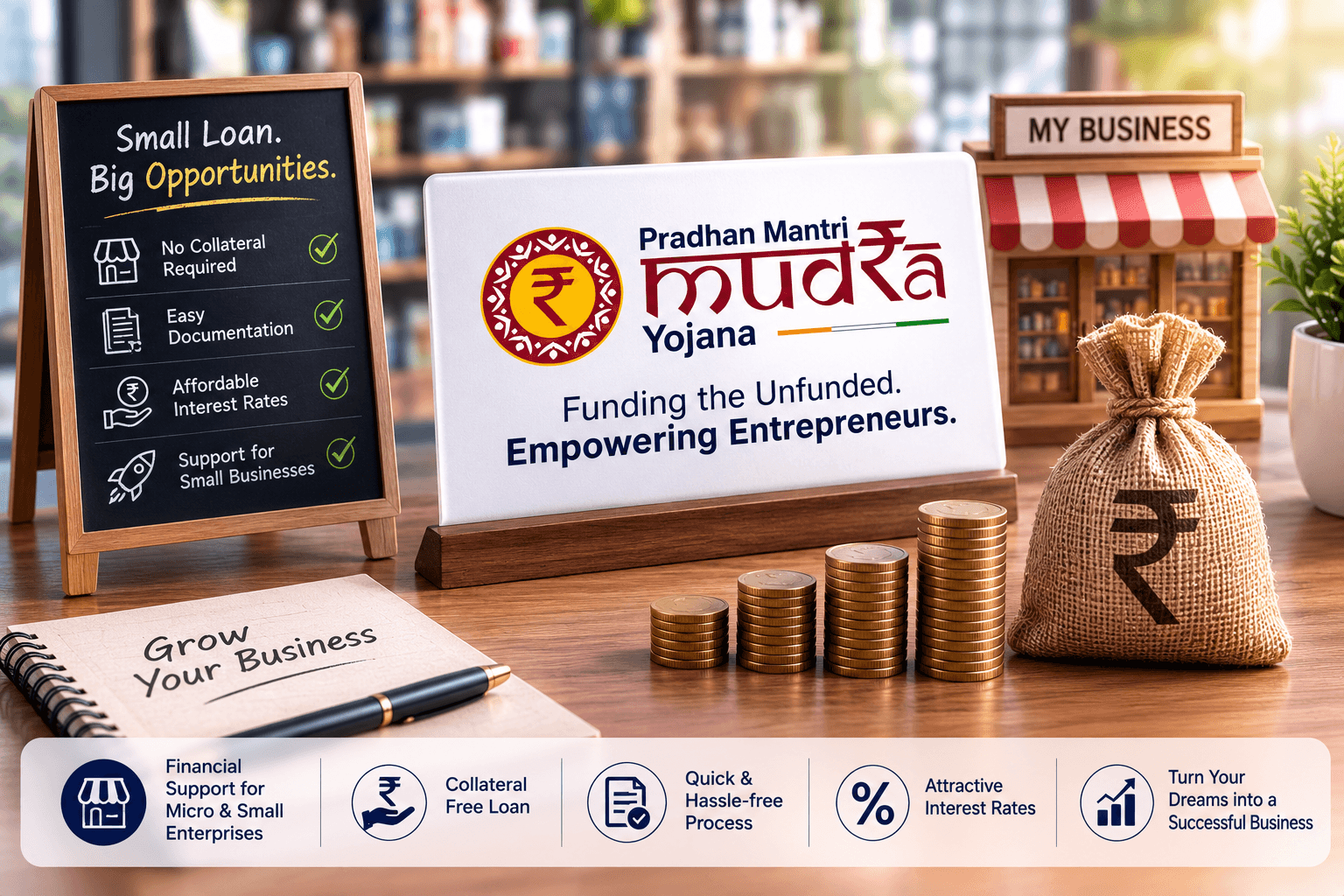
Business finance under the Pradhan Mantri MUDRA Yojana, designed to improve access to institutional credit for eligible micro and small enterprises engaged in income-generating activities.
Up to ₹20 Lakh
Eligible borrowers may access MUDRA loans up to ₹20 lakh under the applicable category and lender assessment.
Business Finance
Designed to support eligible micro and small enterprises engaged in income-generating activities.
Business Growth
Funds can support expansion, modernisation, equipment, working capital, and other eligible needs.
Collateral-Free
Eligible loans may be available without collateral, subject to scheme and lender requirements.
Multiple Lenders
Available through participating banks, NBFCs, MFIs and other Member Lending Institutions.
Overview
What is a Mudra Loan?
A MUDRA Loan is a business loan provided under the Pradhan Mantri MUDRA Yojana (PMMY), launched by the Government of India on 8 April 2015.
The scheme aims to provide access to collateral-free institutional credit for eligible micro and small business enterprises engaged in income-generating activities.
Under the current framework, eligible borrowers can access MUDRA loans of up to ₹20 lakh, subject to the applicable loan category and lender assessment.
MUDRA Loan Categories
| Category | Loan Amount | Description |
|---|---|---|
| Shishu | Up to ₹50,000 | Designed for very small or early-stage business funding requirements. |
| Kishor | Above ₹50,000 and up to ₹5 lakh | For businesses requiring a higher level of funding for development or operations. |
| Tarun | Above ₹5 lakh and up to ₹10 lakh | For eligible enterprises with larger business financing requirements. |
| Tarun Plus | Above ₹10 lakh and up to ₹20 lakh | For entrepreneurs who have previously availed and successfully repaid a Tarun-category MUDRA loan. |
Tarun Plus was introduced with effect from 24 October 2024 and is specifically intended for eligible entrepreneurs who have successfully repaid a previous Tarun-category loan.
Business Purpose
What Can MUDRA Loans Be Used For?
Starting a Business
Funding for starting a new eligible micro or small business.
Business Expansion
Finance for growth, expansion, and increasing business capacity.
Machinery & Equipment
Purchase of machinery, equipment, tools, and other eligible business assets.
Modernisation
Upgrading or modernising an existing business and its operations.
Working Capital
Funding for eligible day-to-day business working capital requirements.
Manufacturing & Trading
Eligible manufacturing and trading activities may be financed under PMMY.
Service Businesses
Eligible service-sector businesses can seek MUDRA financing.
Allied Agriculture
Specified activities such as poultry, dairy, and beekeeping may be eligible.
Eligibility
Who Can Apply?
MUDRA loans are intended primarily for eligible non-corporate, non-farm micro and small enterprises engaged in income-generating activities.
- Proprietorship businesses
- Partnership firms
- Small manufacturing units
- Traders and shop owners
- Service enterprises
- Artisans and craftspeople
- Small transport and logistics businesses
- Food and agro-processing units
- Poultry and dairy businesses
- Beekeeping and other eligible allied agricultural activities
- Other eligible micro-enterprises
Important — Collateral
Collateral-Free Does Not Mean Automatic Approval
One of the key features of PMMY is the availability of collateral-free credit for eligible loans under the scheme. However, borrowers must still satisfy the lending institution's eligibility, documentation, credit assessment, and other applicable requirements.
Eligible PMMY loans may also receive support under the Credit Guarantee Fund for Micro Units (CGFMU) framework, subject to applicable scheme guidelines.
Interest Rates
How Is the Interest Rate Determined?
There is no single fixed interest rate applicable to all MUDRA loans. The interest rate is determined by the respective bank, NBFC, MFI, or other participating lending institution, subject to applicable regulatory guidelines and the lender's policies.
Loan Category & Amount
The applicable rate may depend on the category and size of the MUDRA loan.
Business Type
The nature and viability of the business may be considered by the lender.
Credit Profile
The borrower's credit history and overall financial profile can influence lending terms.
Repayment Capacity
Expected cash flow and ability to service the loan may form part of the lender's assessment.
Lender Policy
Banks, NBFCs and MFIs may apply their own applicable credit and pricing policies.
Applicable Benchmark
The applicable benchmark or lending rate may also affect the final interest rate.
Applicants should compare applicable interest rates and terms offered by different participating lenders before applying.
Borrower's Contribution
Margin or Own Contribution
The borrower's contribution or margin requirement, if any, may depend on the loan type, project cost, lender's credit policy, and applicable scheme guidelines.
Applicants should confirm the exact margin requirement directly with the lending institution before finalising the loan application.
Repayment
Repayment Period
The repayment period is not a single standard tenure applicable to every MUDRA loan.
- Type and amount of loan
- Nature of the business
- Business cash flow and repayment capacity
- Whether the facility is a term loan or working capital facility
- Business and project requirements
- EMI and repayment schedule
- Moratorium provisions, where applicable
- Prepayment and foreclosure conditions
Charges
Processing Fees & Other Charges
Processing fees should be confirmed with the concerned lender. Charges and fees can vary depending on the lending institution and applicable policies.
Application
Where Can You Apply for a MUDRA Loan?
MUDRA loans are available through participating Member Lending Institutions (MLIs), including:
JanSamarth Portal
Applicants may also explore the JanSamarth portal, where PMMY is among the credit-linked schemes available through the platform.
Documentation
Documents Required
The documents required can vary depending on the lender, loan amount, and type of business.
Providing complete and accurate documentation can help avoid delays in the loan assessment process.
Due Diligence
Points to Consider Before Applying
Assess Your Funding Requirement
Borrow only the amount required for your genuine business needs.
Prepare a Business Plan
Clearly explain the business activity, expected income, expenses, and repayment capacity.
Compare Lenders
Interest rates, charges, documentation requirements, and processing practices may differ.
Understand Repayment Obligations
Ensure that expected business cash flow can support the EMI or repayment schedule.
Check All Charges
Review the sanction letter and loan agreement carefully before accepting the facility.
Maintain a Good Credit Record
Timely repayment can support future borrowing requirements.
Use the Loan for the Approved Purpose
Funds should be utilised according to the sanctioned business purpose.
Understand Tarun Plus
Loans above ₹10 lakh and up to ₹20 lakh under Tarun Plus are specifically for eligible entrepreneurs who successfully repaid a previous Tarun-category MUDRA loan.
Current Scheme Highlights
PMMY Since 2015
Loans Sanctioned
57.79 Crore
Approximately, as reported by the Government as of 27 March 2026
Cumulative Sanctioned Amount
₹40.07 Lakh Crore
Approximately, since the scheme's launch
Things to Know
Before Accepting a MUDRA Loan
- Compare interest rates and loan terms offered by different participating lenders
- Confirm processing fees, documentation charges, taxes, and other applicable costs
- Understand the repayment schedule, EMI obligations, moratorium and prepayment conditions
- Ensure the expected business cash flow can support the loan repayment
- Use the loan amount only for the approved business purpose
- Confirm Tarun Plus eligibility before applying for loans above ₹10 lakh
- Verify the latest scheme guidelines directly with the lender or official government platform
Conclusion
Making an Informed MUDRA Loan Decision
The Pradhan Mantri MUDRA Yojana is designed to improve access to institutional, collateral-free credit for eligible micro and small entrepreneurs.
Under the current structure, loans are available through Shishu, Kishor, Tarun and Tarun Plus categories, with eligible Tarun Plus borrowers able to access loans above ₹10 lakh and up to ₹20 lakh.
Before applying, borrowers should carefully assess their business requirements, repayment capacity, interest rate, fees, documentation, and lender-specific terms. Loan approval remains subject to the lending institution's assessment and applicable guidelines.
Disclaimer
Loan eligibility, interest rates, charges, documentation requirements, and other terms may vary between lenders and may change over time. Applicants should verify the latest details directly with the concerned bank, NBFC, MFI, or official government platform before applying.
Have questions about a MUDRA Loan?
Talk to a Wealth Doctor — free advice.