

Secured Finance
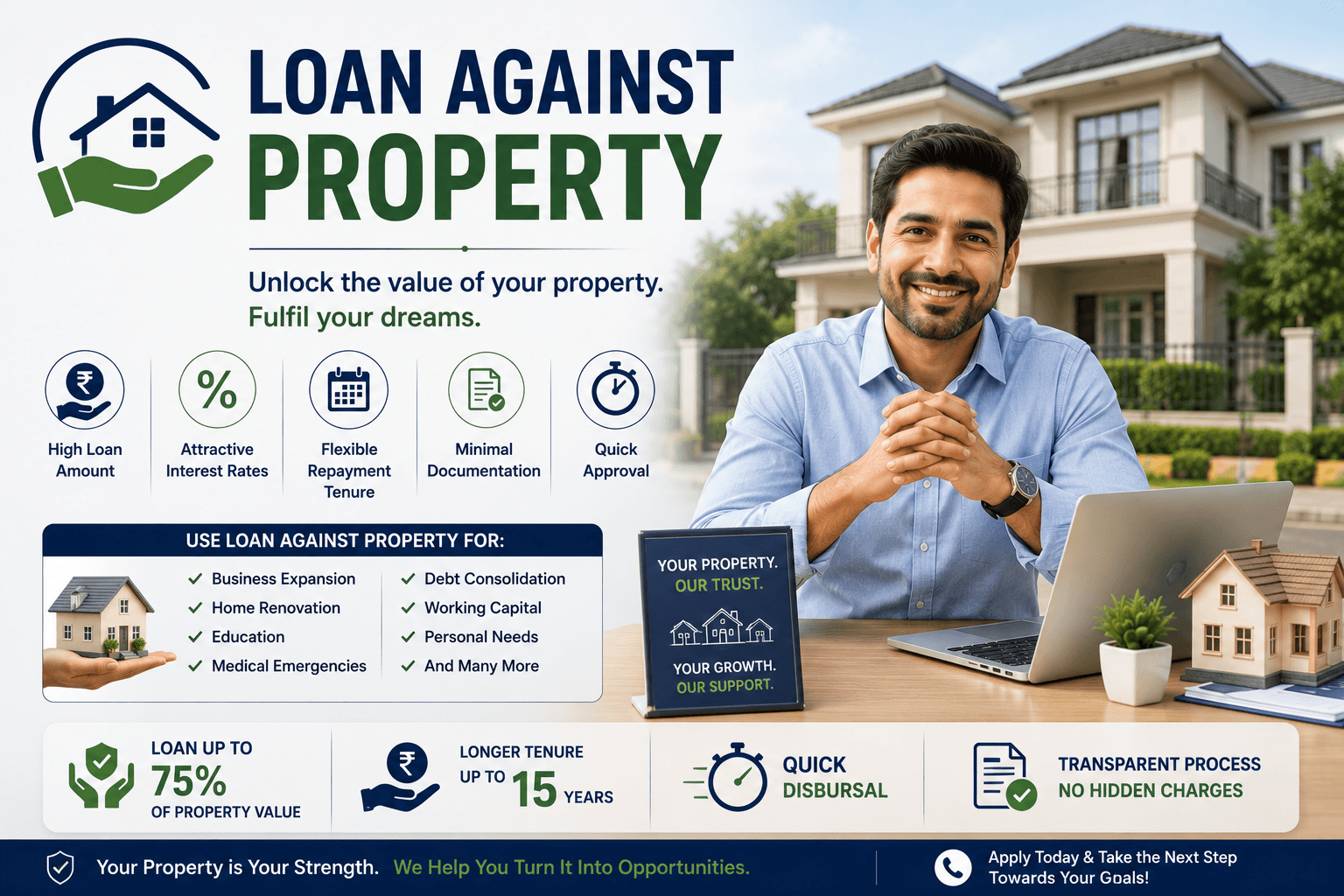
Loan Against Property
A secured loan where your property is used as collateral to access funds for eligible personal or business needs.
Security
Property
Purpose
Personal / Business
Lender
Bank / NBFC
LTV
Lender Dependent
Tenure
Several Years
Overview
What is a Loan Against Property?
A Loan Against Property (LAP) is a secured loan where a residential or commercial property is pledged as collateral.
Eligibility
Who Can Apply?
Applicant
Salaried, self-employed or eligible businesses.
Property
Clear and acceptable property title.
Income
Adequate income and repayment capacity.
Credit Profile
Credit history and existing liabilities.
Eligibility, property requirements and loan limits vary by lender.
Collateral
What Property Can Be Used?
Residential
Eligible residential properties may be accepted.
Commercial
Commercial property may also qualify.
Loan Amount
How Much Can You Borrow?
The loan amount depends on the lender's property valuation, LTV policy, income, credit profile and existing liabilities.
Property Value
Lender-assessed value.
LTV
Lender's applicable limit.
Repayment
Income and cash-flow capacity.
Documentation
Documents Required
KYC
PAN, Aadhaar and address proof.
Income Proof
Salary, ITRs, bank statements or financials.
Property Documents
Title, sale deed and other legal documents.
Business Documents
Required where the loan is for business use.
Application
How to Apply
Compare
Check lenders and eligibility.
Submit
Provide KYC, income and property documents.
Approval
Complete legal, valuation and credit checks.
Pricing
Interest Rates & Charges
Interest rates vary by lender, borrower profile, property, loan amount, tenure and market conditions.
Interest
Loan Amount
Tenure
Property
Check the KFS, processing fees, legal and valuation charges, stamp duty and other applicable costs before accepting the loan.
Repayment
Repayment & Interest
Long Tenure
LAP can have repayment periods of several years.
Fixed Rate
Rate generally remains fixed as per the agreement.
Floating Rate
Rate may change with the applicable benchmark.
Tax
Tax Treatment
Tax treatment generally depends on how the borrowed funds are used. A LAP does not automatically qualify for housing-loan tax benefits simply because property is mortgaged.
Consult a qualified tax professional for your specific situation.
Important
Risks to Consider
Default can put the mortgaged property at risk.
Floating rates may increase your repayment cost.
Long tenure can increase total interest paid.
Lender valuation may differ from your expected value.
Missed payments can affect your credit history.
Compare total borrowing cost, not only the interest rate.
FAQs
Loan Against Property Questions
How much can I borrow against my property?+
It depends on the lender's valuation, LTV policy, income, credit profile and existing liabilities.
Can I continue using my property?+
Generally yes. You retain possession while the property remains mortgaged to the lender.
Can I use LAP for business?+
Yes, eligible lenders may allow business purposes such as expansion or working capital.
Can I prepay the loan?+
Yes, subject to the loan terms and applicable RBI rules.
Is LAP cheaper than a personal loan?+
It may offer a lower rate because it is secured, but compare the complete borrowing cost and property risk.
Conclusion
Use Your Property Carefully
A Loan Against Property can provide substantial secured funding, but the property is at risk if the loan is not repaid. Compare lenders, understand the total cost and borrow within your repayment capacity.
Borrow only what you can comfortably repay.
Disclaimer
Interest rates, LTV ratios, eligibility, loan amounts, charges and repayment terms vary by lender and may change. Verify the latest terms directly with the lending institution before applying.
Need help with a Loan Against Property?
Talk to a Wealth Doctor — free advice.