

Home Insurance · Property Protection · Household Security
Home Insurance
Financial protection for your residential property, household belongings and other covered risks.
Building Protection
Helps cover eligible structural damage.
Contents Cover
Protects eligible household belongings.
Specified Perils
May cover fire and natural perils.
Burglary Cover
Available under selected policies.
Financial Protection
Reduces the impact of covered losses.
Overview
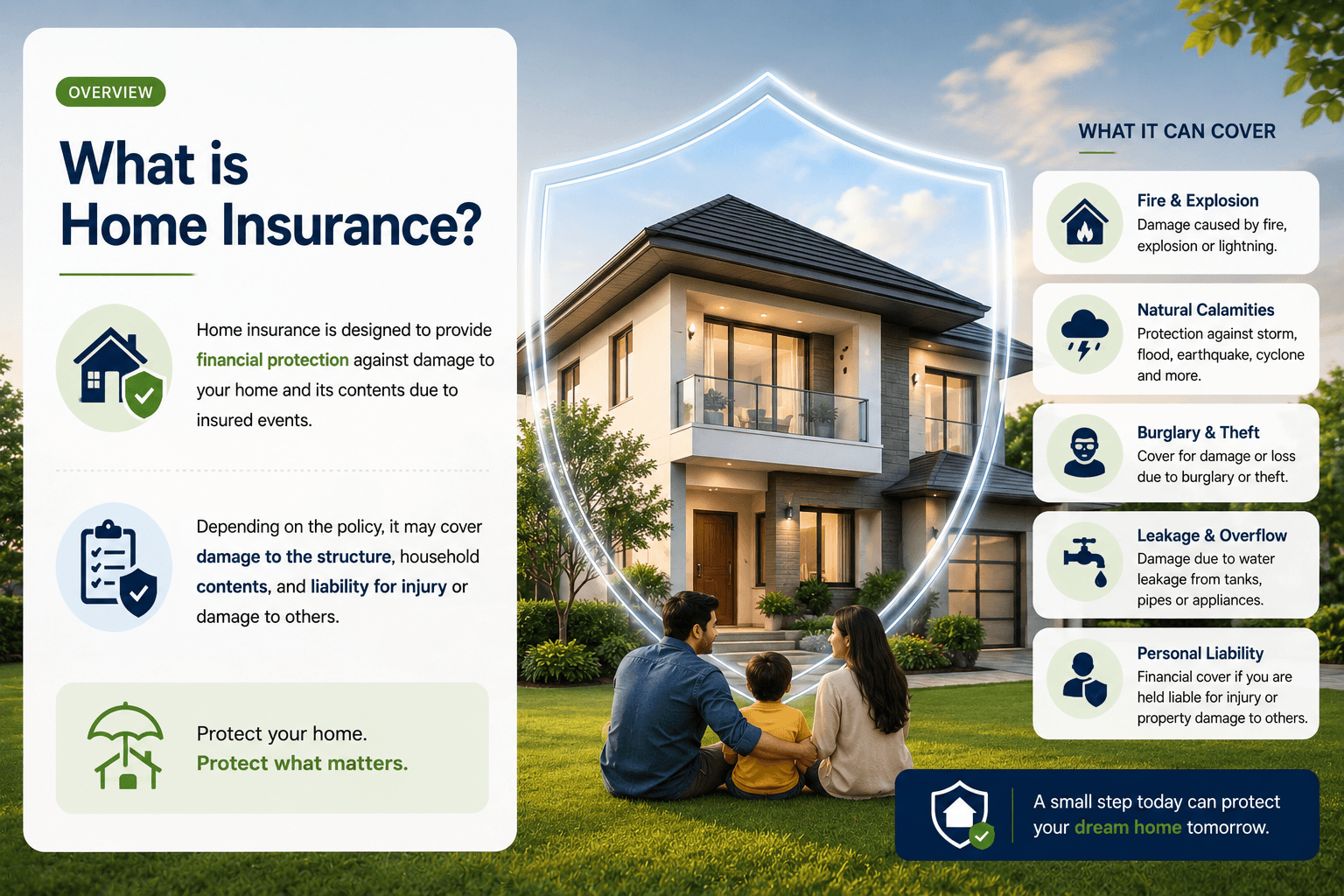
What is Home Insurance?
Home insurance is designed to provide financial protection against specified risks affecting a residential property. Depending on the policy, it may cover the building, household contents, or both.
Covered risks may include fire, lightning, storm, cyclone, flood, earthquake and other specified perils. Burglary, theft and additional protections depend on the selected policy.
Why Consider
Why is Home Insurance Important?
- Helps protect the residential building against covered damage
- Can protect eligible furniture, appliances and household belongings
- Provides protection against specified natural and other perils
- May provide optional burglary, theft and accidental-damage cover
- Can reduce the financial impact of major property losses
Eligibility
Who Can Buy Home Insurance?
- Homeowners
- Apartment or flat owners
- Landlords
- Tenants for eligible contents
- Housing societies or eligible property owners
The buyer should generally have an insurable interest in the property or assets being insured.
Types of Home Insurance Coverage
Building / Structure
Protection for the insured residential structure and eligible permanently installed fixtures.
Household Contents
Cover for eligible furniture, appliances, electronics, clothing and household belongings.
Fire & Allied Perils
May cover fire, lightning, explosion, storm, cyclone, flood, earthquake and other specified events.
Burglary & Theft
May be included in selected packages or available as separate cover or an add-on.
Additional Covers
Options may include accidental damage, alternative accommodation and tenant liability.
Standardised Framework
Bharat Griha Raksha
Bharat Griha Raksha is a standardised home-insurance product framework in India. Insurers may also offer their own home or property insurance products with different features and optional covers.
Building Protection
Protecting the Residential Structure
Building cover can provide financial assistance for repairing or rebuilding the insured residential structure after damage caused by covered events.
The building sum insured should generally reflect the appropriate rebuilding or reinstatement cost rather than simply the market value.
Contents Protection
Protecting Household Belongings
Furniture
Appliances
Electronics
Clothing
Kitchen equipment
Other belongings
Coverage is subject to the sum insured, valuation basis, exclusions and policy conditions.
Specified Perils
Fire, Natural & Other Risks
- Fire and lightning
- Explosion or implosion
- Storm and cyclone
- Flood and inundation
- Earthquake
- Other perils specifically covered by the policy
Additional Protection
Burglary, Theft & Optional Covers
Burglary and theft may require separate coverage or may be available under a package policy or add-on. They should not be assumed to be automatically included in every home policy.
Accidental Damage
Alternative Accommodation
Tenant Liability
Key Benefits
Benefits of Home Insurance
- Financial protection for covered building damage
- Protection for eligible household belongings
- Protection against specified major property risks
- Flexible building and contents coverage options
- Additional protection through optional covers
Important
Home Insurance Is Not an Investment
Home insurance is a protection product, not an investment product. It generally does not provide investment returns, interest, wealth creation or a maturity benefit.
Claims are governed by the sum insured, coverage limits, deductibles, exclusions, valuation conditions and policy terms.
Coverage Amount
Assess the Correct Sum Insured
Ensure that the building and household contents are insured for an appropriate amount. Underinsurance may result in inadequate compensation after a major loss.
Building
Consider the estimated rebuilding or reinstatement cost.
Contents
Consider replacement value or the applicable valuation basis.
Buying Guide
Where Can One Buy Home Insurance?
- Directly from general insurance companies
- Through licensed insurance agents or brokers
- Through registered insurance web aggregators
- Through banks or other authorised distribution channels
- Always verify the insurer or intermediary before purchasing
Documentation
Documents Generally Required
- Identity proof
- Address or property proof
- Property ownership documents, where applicable
- Construction, area and occupancy details
- Household contents details and values
- Photographs or valuation reports, where required
Application
Declare Property Details Correctly
Provide accurate information about:
Incorrect or incomplete disclosures may affect policy terms or claims.
Location Risk
Check Natural Catastrophe Coverage
If your property is exposed to flooding, cyclones, earthquakes or other natural hazards, carefully verify whether these risks are covered and under what conditions.
Records
Maintain Records of Valuable Items
Keep photographs, invoices, purchase records and valuation documents for valuable household items where possible.
These records can help support the claims process when required.
Things to Know
Before Buying Home Insurance
- Choose an appropriate sum insured
- Decide whether you need building, contents or both
- Understand the covered perils
- Review policy exclusions
- Check whether theft and burglary are covered
- Understand deductibles or excess
- Declare property details accurately
- Check natural catastrophe coverage
- Keep records of valuable items
- Understand the claims process
Claims
Understand the Claims Process
- Know how and when to notify the insurer
- Keep photographs and supporting documents ready
- Understand whether damage inspection is required
- Keep repair estimates where applicable
- Know the applicable deductibles and claim limits
Conclusion
Protect Your Home & Household Assets
Home insurance can help reduce the financial impact of covered damage to your residential property and household belongings.
Compare the sum insured, covered perils, exclusions, deductibles, valuation basis, optional covers and claim conditions rather than choosing a policy only by premium.
Need help choosing home insurance?
Talk to a Wealth Doctor — free advice.