

Group Protection · Employee Benefits · Health Cover
Group Health Insurance
Health insurance coverage provided to eligible employees or members of a group under a common policy.
Hospital Cover
Eligible medical expenses.
Group Coverage
Members under one policy.
Dependants
Family members may be covered.
Cost Advantage
Group pricing may be competitive.
Overview
What is Group Health Insurance?
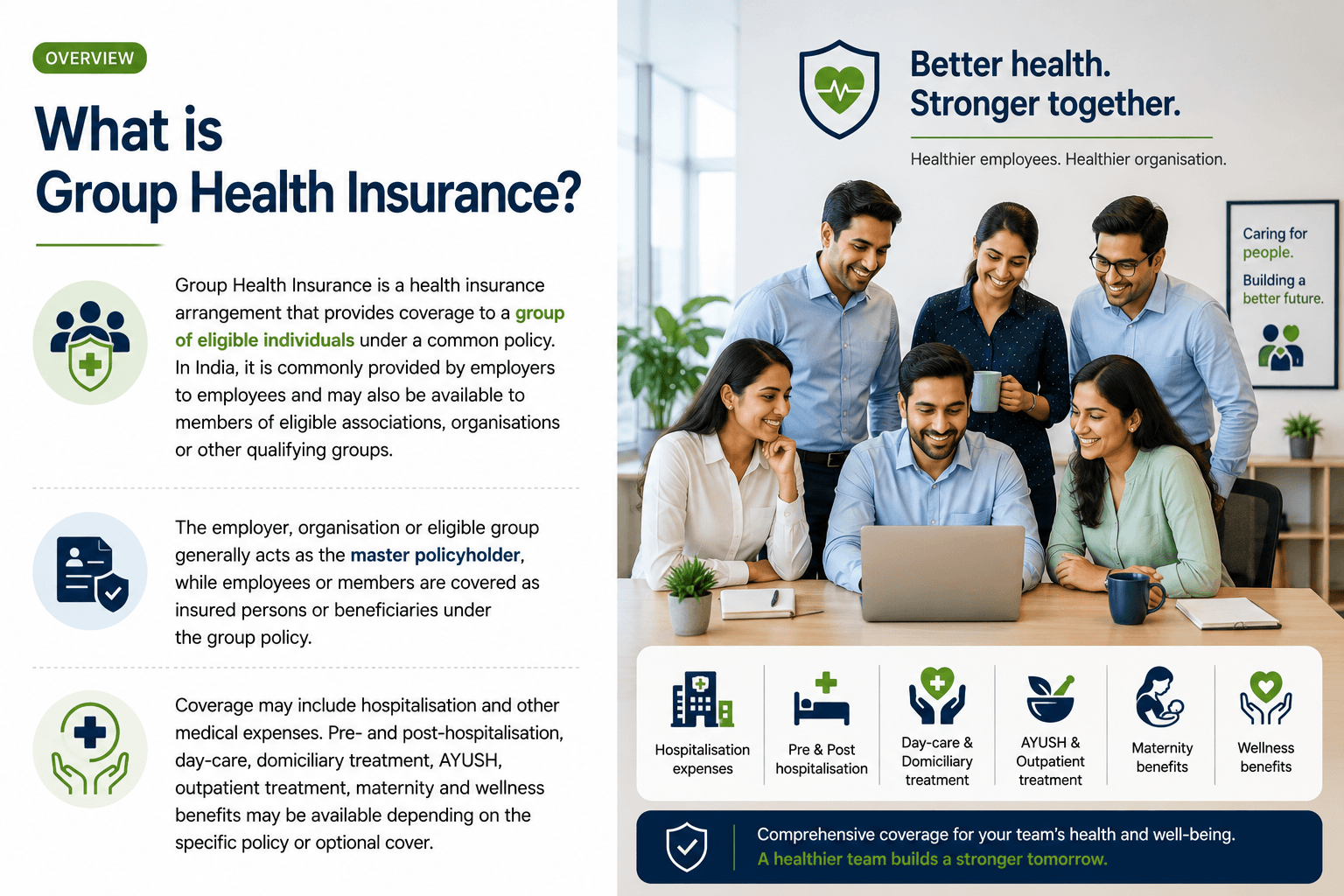
Group Health Insurance is a health insurance arrangement that provides coverage to a group of eligible individuals under a common policy. In India, it is commonly provided by employers to employees and may also be available to members of eligible associations, organisations or other qualifying groups.
The employer, organisation or eligible group generally acts as the master policyholder, while employees or members are covered as insured persons or beneficiaries under the group policy.
Coverage may include hospitalisation and other medical expenses. Pre- and post-hospitalisation, day-care, domiciliary treatment, AYUSH, outpatient treatment, maternity and wellness benefits may be available depending on the specific policy or optional cover.
Why Consider
Why Choose Group Health Insurance?
- Helps members manage eligible medical and hospitalisation expenses
- Can form part of an employee or member benefits programme
- Group pricing may be competitive depending on the group and coverage
- Employers or organisations may customise coverage within the insurer's offerings
- Enrolment, additions, deletions and renewals can be administered centrally
Eligibility
Who Can Benefit from Group Health Insurance?
- Employees of an organisation
- Eligible members of qualifying groups
- Professional or other eligible associations
- Eligible organisations and institutions
- Dependants where permitted by the policy
Eligibility, age limits, minimum group requirements and dependant definitions depend on the insurer and specific group policy.
Key Benefits
Benefits of Group Health Insurance
- Hospitalisation coverage for eligible illness or injury
- Pre- and post-hospitalisation and other specified medical expenses may be covered
- Cashless treatment may be available through network hospitals
- Eligible spouses, children, parents or other dependants may be included
- Employers may select a suitable sum insured and coverage structure
- Maternity, wellness, health check-ups and other optional benefits may be available
Healthcare Protection
Financial Support During Medical Emergencies
A suitable group policy can reduce the financial burden of eligible hospitalisation and treatment expenses. The actual benefit depends on the sum insured, covered services, exclusions, sub-limits, co-payments and other policy conditions.
Hospitalisation
Medical Treatment
Family Healthcare
Group Coverage
How Group Health Insurance Works
Master Policyholder
Employer, organisation or eligible group arranges the policy.
Insured Members
Eligible employees or members receive health insurance coverage.
Dependants
Eligible family members may be covered where the policy permits.
Buying Guide
Where to Obtain Group Health Insurance?
- IRDAI-registered health insurance companies
- Licensed insurance brokers
- Authorised insurance intermediaries
- Eligible associations, organisations and qualifying groups
Before purchasing a policy, organisations should verify that the insurer or intermediary is appropriately registered or authorised.
Coverage
What Can Group Health Insurance Cover?
Depending on the policy, coverage may include hospitalisation, pre- and post-hospitalisation expenses, day-care procedures, ambulance services, domiciliary treatment, AYUSH treatment and other specified healthcare services. Maternity, wellness and outpatient benefits may also be available under certain products or optional covers.
Family Coverage
Coverage for Dependants
Some employer-sponsored policies allow employees to include spouses, children, parents or other eligible dependants. The definition of eligible family members, additional contribution and coverage conditions depend on the policy.
Important
Pre-Existing Diseases and Waiting Periods
Group policies may have different terms regarding pre-existing diseases and waiting periods. Review the policy wording rather than assuming immediate coverage for every medical condition.
Documentation
Documents & Information Required
- Group or organisation details
- Employee or member details
- Name, age and relationship information
- Identity and KYC information, where required
- Dependent details, where applicable
- Medical information, where required
- Additional underwriting information, where applicable
Before Choosing
Things to Consider
- Review exactly what the policy covers
- Choose an appropriate sum insured
- Check family and dependant eligibility
- Understand pre-existing disease terms and waiting periods
- Check sub-limits and co-payments
- Review network hospitals and cashless facilities
- Understand policy exclusions
- Check member addition and deletion rules
- Understand renewal terms and premium changes
- Review the claims process and timelines
- Ensure employees receive clear policy information
Claims
Understand the Claims Process
- Understand cashless and reimbursement claim procedures
- Know the documents required for a claim
- Review applicable claim notification timelines
- Know the insurer or TPA contact details
- Understand pre-authorisation requirements for cashless treatment
Employee Benefits
Important Considerations for Employees
Employer-provided Group Health Insurance may not always be sufficient for long-term healthcare needs. Coverage may change at renewal or may end when employment or eligibility ends.
- Check whether coverage continues after leaving the organisation.
- Check whether dependants remain covered.
- Check whether migration or portability options are available, where applicable.
- Check whether the group sum insured is sufficient for the family's healthcare needs.
Regulatory Note
Coverage Depends on the Specific Product
The health insurance framework provides for products, add-ons and riders catering to a wider range of needs. This does not mean that every policy covers every type of treatment or condition. Policyholders should always check the specific product wording, exclusions, sub-limits, co-payments and other conditions.
Conclusion
A Structured Way to Provide Health Protection
Group Health Insurance is a valuable employee or member benefit that can provide financial protection against eligible medical and hospitalisation expenses. It allows organisations to arrange health coverage for a group under a common insurance framework and may provide administrative convenience and potentially competitive pricing.
Before choosing a policy, carefully compare the sum insured, hospital network, coverage inclusions, exclusions, pre-existing disease terms, waiting periods, co-payments, sub-limits, family coverage, renewal terms and claims process.
Need help understanding Group Health Insurance?
Talk to a Wealth Doctor — free advice.